How to Recognise a Fake Bank Call
By Zakria Ahmad · 2 November 2026 · Last updated: 2 November 2026
What is a fake bank call?
A fake bank call is a phone call from someone pretending to be your bank. The caller may say there is fraud on your account, your card will be blocked, or you must verify your account now. The aim is to make you share a password, PIN, OTP, or card details, or to send money to a "safe account" that is actually the scammer's account.
How does it work?
First, the scammer calls with a number that may look like a bank number, or they use a fake caller ID. Then they create urgency: "Your account is under attack, act now." Then they ask you to confirm details, read out an OTP, install an app, or transfer money. A real bank will never ask you to do these things on an incoming call.
Red flags to check
- The caller asks for a password, PIN, OTP, or full card number. A real bank never asks for these on a call.
- The caller creates panic and rushes you: "Do it now, or your money is gone."
- The caller asks you to transfer money to a "safe" or "new" account.
- The caller asks you to install an app or give remote access to your phone.
- The caller refuses to let you hang up and call back on the official number.
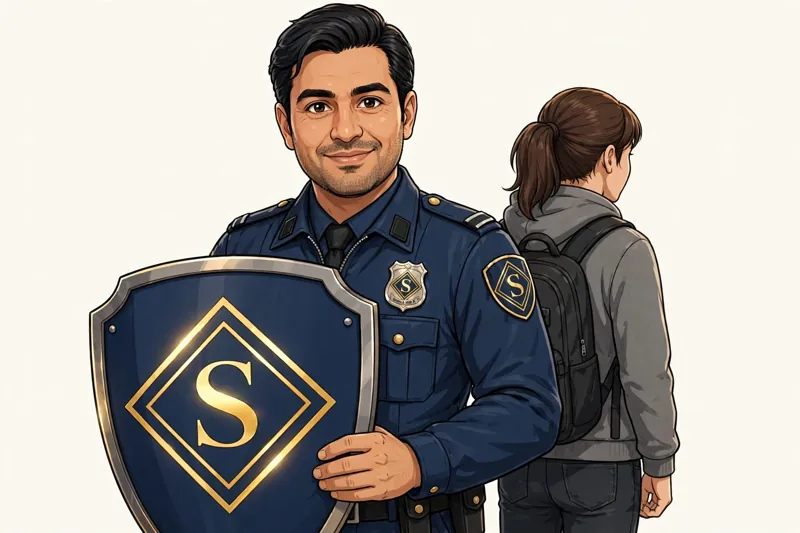
Guard tip: Hang up, then call the bank yourself using the number on the back of your card or in the official app. Never use a number given by the caller.
What to do
- Stay calm. Do not share any code, password, or PIN.
- Hang up. Do not argue with the caller.
- Call your bank yourself on its official number and ask if there is really a problem.
- Check your account only in the official app, never through a link or app the caller sent you.
What not to do
- Do not transfer money to a "safe account" — there is no such thing from a bank call. This is a classic scam.
- Do not read out an OTP, even if the caller says it is to "cancel" a transaction.
- Do not give remote access to your phone or computer.
If you were already scammed
- Call your bank at once and ask them to freeze the account and reverse the transfer if possible.
- Change your passwords, starting with your email and bank accounts.
- Report the call to your bank and to the official cybercrime reporting service in your country, for example FIA Cybercrime in Pakistan, Action Fraud in the UK, or the FTC in the USA.
- Be careful of a second scam: anyone who asks for money to "recover" your money is also a scammer.